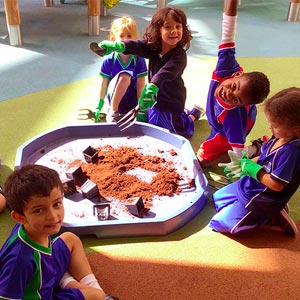
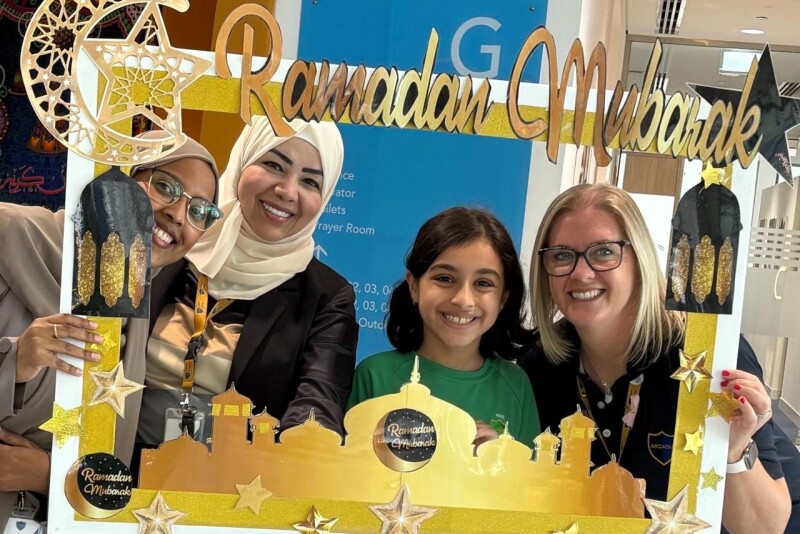
"Coming to Arcadia was a very deliberate decision for me. I have always been happy in the schools I’ve worked at before, so the biggest pull was the sense of community. It’s one of a few unique schools in Dubai that’s not looking to be enormous; instead, it maintains a strong community feel, which suits my personal ethos down to the ground. I moved here with my three children, which was a big decision, but I felt confident about leading and working in a school where my own children would be students.
"There’s a huge sticker on the floor that says, “Happiness First.” That is genuine – it is what we live and breathe. It made my decision easier.
"I've worked in schools both in the UK and the UAE, and I've taken the best bits of everywhere I've worked – and I've been lucky enough to work in some amazing places. Arcadia is a great place to bring my experience and skills and build on what's already brilliant. I’m joining at an exciting time of ‘what’s next?’."
"Curriculum development. The school is in a fantastic position, eight years in; it has been led by a highly successful senior leadership team. We're a busy enriched school with a wide range of opportunities for children. So, now we are tweaking, refining, and looking at the direction we want to travel. I am making sure that we're being forward-thinking and preparing children with the skills they’ll need in the future.
"We follow the British curriculum, but it's not as rigid as people think it might be. We must think about how it's adapted for the international setting, look at real-life links, children's interests, and then about how we get them future-ready. Does our planning, our teaching and learning allow for critical thinking? Does it allow for genuine creativity? Or are we keeping them restricted within a curriculum model? It's not about the Romans or the Vikings or the geography skills, it's about what you do with the skills that lead to those things.
"A lot of schools talk about being future-ready. Nobody knows what that's going to look like, so it's about making sure that we're equipping the children with the learning skills that are necessary for their future life. We don't have to look 50 years down the line, but just their next step.
"We are developing a wellbeing curriculum that will sit alongside our academic curriculum and we're looking at the purposeful outcomes; if children are going to do something, the ‘why?’ is so important. The shift towards Artificial Intelligence can’t be at the cost of well-being."
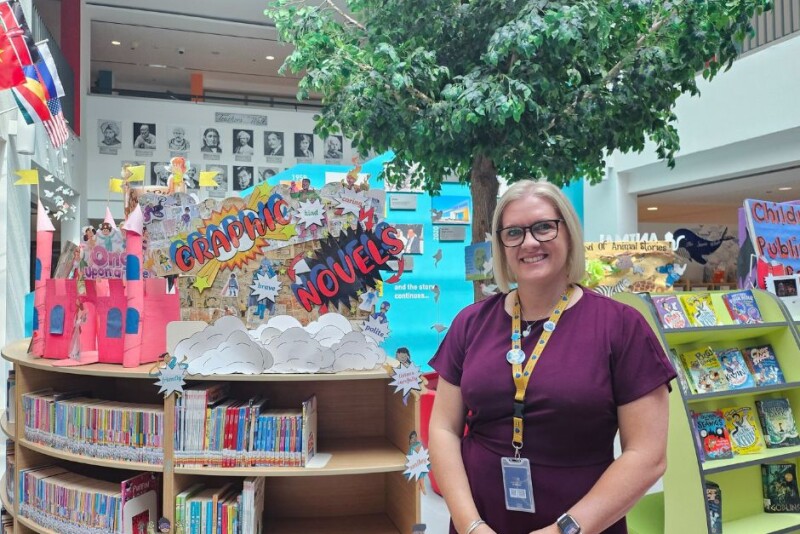
Sarah Gray, Head of Primary at Arcadia British School
"I love primary education — it’s the best job in the world. Children are at the very beginning of their learning journey; they're open and curious. It's our job to keep that going. The British curriculum, for me, allows that.
"I love that rigour that comes with the British curriculum; it's recognised across the world. However, nothing is perfect; curricula should be reviewed regularly to move with the times. We're a British curriculum school, that is our very core, but we adapt and enrich that for the context that we're in. Our demographic now is highly likely to be transient across the world, so we want them to be equipped for that. There's lots of different avenues that you can take with project-based and experiential learning, so it's not so much about the curriculum, it's what you do with it.
"For example, we just finished Stream week last week: Our Year Two children have been making soap, marketing it, advertising it and linking it into their writing; Year Four children have been creating sustainable schools, looking at Sustainable Development Goals, climate change and real-world links. Now that sounds very IB; it's about making purposeful links. But of course, you can do that in the British curriculum. You should do that in the British curriculum."
"Technology, without a doubt. We want our children to be able to use technology appropriately now and in the future. For the parents that I speak to, and as a parent myself, it's about striking that balance. At Arcadia, whether it's AI, iPads, 3D printing – we've got to remember it's not just about screens – our ethos is it should enrich and enhance the learning, not replace the learning.
"Our next step is the strategic direction: Which parts of AI we want to embrace and what's appropriate. We're engaged in a research project about AI and screen time, and we've just created an innovation team in Primary, focused on when tech can enhance learning, and when not to use it. There's also a focus group with parents on our digital policy.
"Most technology is for teenagers upwards, and rightfully so, because there's a big safeguarding and well-being aspect that comes with that.
"Having said that, we've got phenomenal seven-year-olds who can create a classroom of the future using AI. We don't want to remove that.
"The most dangerous predicament in school leadership right now is the need to embrace what's happening around us, because if we don't, we'll either get left behind or we'll go in the wrong direction. It's about being broad and listening to what's going on around us, not just in education but beyond education – because that's where we're headed."
"There are fewer big transitions. There's still a change from Primary to Secondary, because it's a shift in curriculum and a child’s developmental stage. In terms if curriculum, we can look at what something looks like in Year Nine, and then what it will look like by GCSE and A-level, and work backwards, to see that the curriculum is progressing through; a vertical curriculum.
"But it doesn't mean that we don't keep our eyes open to what is going on around us, because as an international school, you're always welcoming students along the way. Ultimately for Primary, it's our job to make sure that the foundations for learning are brilliant, so that no matter whether they stay with us or move on, they're ready."
"It enhances our facilities. Choosing a school is a huge decision for a parent and you never quite know if you're going to get it right until your children are in the building and until they've experienced it. Having the two campuses helps that decision in a sense because you've got double the resources but it's not so overwhelming. It tends to be the Primary children using the facilities in the Secondary building, rather than the other way around, so it's an important part of transition. By the time our children get to Secondary, it's no big deal."
"The most important part is that there are no surprises. It's still a change. It's not sensible to say it wouldn't be. But pupils and parents know what to expect. It's about clear communication and lots of opportunities for children to try it out.
"Our robust programme has already started; last week we had a new students’ day, where we paired up students who are coming from other schools with our existing Year Six students. We work closely with schools that feed into us, such as Victory Heights Primary.
"The programme includes parent meetings so that they're clear about curriculum, expectations, the academic and the pastoral. There are opportunities to come in and see the facilities; for subjects the pupils have never done before, from design to psychology, there are taster sessions to look ahead, even to GCSE, and see what life is like in Secondary. We have a middle-school approach for Year Six, so they've already started seeing different teachers in preparation for Secondary life; teachers come into the Primary classrooms and teach the children, and they will go and visit them. There are fun sessions and collaborative competitions.
"However, they are still in Year 6 – we're not pretending they've gone to Secondary yet. We want to enjoy and embrace Year 6, their last stage of Primary, so the transition is handled at key points along the way.
"Every cohort of children is different – what worked with one Year 6 might need to be adapted with the next. The teachers that know the students best, having those conversations, is the key part of transition."
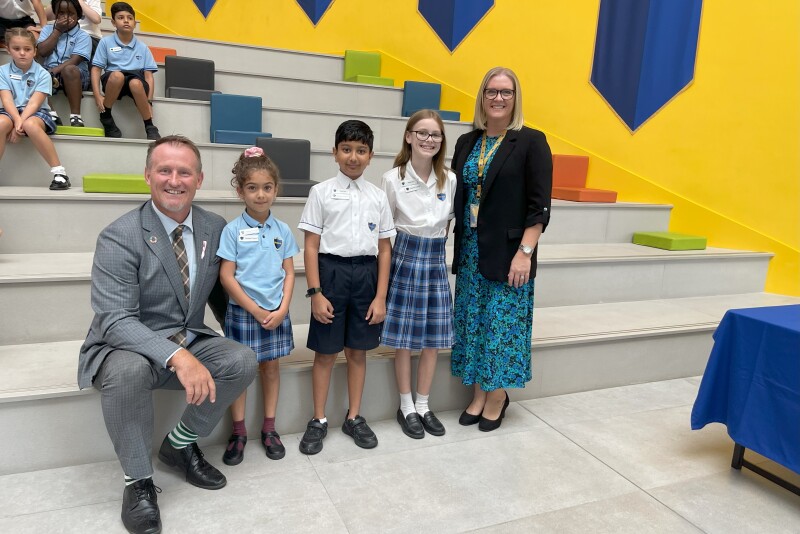
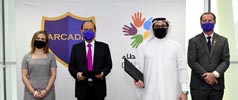
Head of Primary Sarah Gray with Principal Giles Pruett.
"Independence and organisation are key. Our job, as schools and families, is to make sure that we invest in that independence, because we want our children to be able to think for themselves. We want them to be able to make robust decisions. We want them to be in the right place at the right time. That takes time and some children are better at it than others. Our transition programme is not a separate initiative – it’s a roadmap and the input from our well-being programme helps us to tailor it in the right direction, seeing where there are gaps for each individual and if they need extra support."
"We're a fully inclusive school. That means every child that comes into our school is part of the Arcadia family. Inclusion is about making sure that we have a personalised approach to learning for every child. Now, that's something that anyone can just say, but here it's a genuine case of where we're looking at the children and the provisions that we put in through our inclusion team, but also through our class teachers. Our inclusion is rated Outstanding, and a large part of that is down to our inclusion team [but] every single adult in this school is a teacher of inclusion; this isn't a separate department.
"We're well-staffed, we're well-resourced and we invest in it because we believe in it.
"We have ACAP, the Arcadia Alternative Pathway; for students who may not be able to access certain parts of the curriculum, so that they can still achieve individual success. That, for me, is one of our biggest shining beacons. The inclusion programme is about the whole child and giving them success from their individual starting points. So, for a child that comes in with additional needs, it's about the balance of integrating them into the classroom and building up their social skills. They may have a one-to-one LSA, but what we're invested in is making sure that they are part of the class, and that the teacher and the children are working with them. If they have reached their limit of concentration, for example, they can take a break and rejoin; it's about what's appropriate for that individual. Our support staff know the students very well, so they strike the balance of when the child is integrated in the whole class setting and it's a benefit, and when the child needs time.
"Removing barriers is the goal. For example, a child could be an amazing scientist whose barrier is writing, so it's giving them tools, at a class teacher level, to record their findings verbally, in a video or a drawing."
"In the pipeline is enriching our curriculum further with real-life links, purposeful outcomes, links to business and industry and how that fits into our Junior MBA programme; and financial literacy. When we asked our families what they would like to see more of in our curriculum, financial literacy came up.
"Also coming up is Apex. Our Arcadia Primary Exhibition is all about presentation skills, communication skills, collaboration and critical thinking, and feeds into the Junior MBA, which is also heading into term three – the children will come back with a multitude of different business ideas after Spring Break."
"This programme is unique to Arcadia and was created by the group’s CEO, Naveen Gupta, to introduce financial literacy, entrepreneurship, and business acumen to students. It's about seeing an idea from inception to end. There are lessons about business structures, finance, product design, marketing, and eventually they pitch to the senior leaders and our CEO.
"An MBA is about making money; we want our children to know that. But our school has the value of altruism, so the winning ideas then donate their prize money to a charity. It embodies a real-life business model for the future with our school values of giving back."
"I never thought I would come out of the classroom. I still teach four lessons a week and I will continue to do so – it's my favourite part of the week. I am a tiny part of an amazing school, and amazing schools before this. For me it's about the team, and the most important things are growing your team, growing your people, and being open-minded. I don't have all the ideas, I don't have all the answers. I can only be successful in my job as a school leader if my team is successful around me. It's about investing in people. No matter what, integrity is my absolute core value. If you've got that, if you've got a sense of purpose and direction and you've built a great team, you can't go far wrong."
"Just before I walked into this office, I was sitting in a giant Lego helicopter in FS, and they were driving me to London. Where else do you get to walk into a room of young people who are full of curiosity and ideas? It's hard, but it's the best job in the world."